

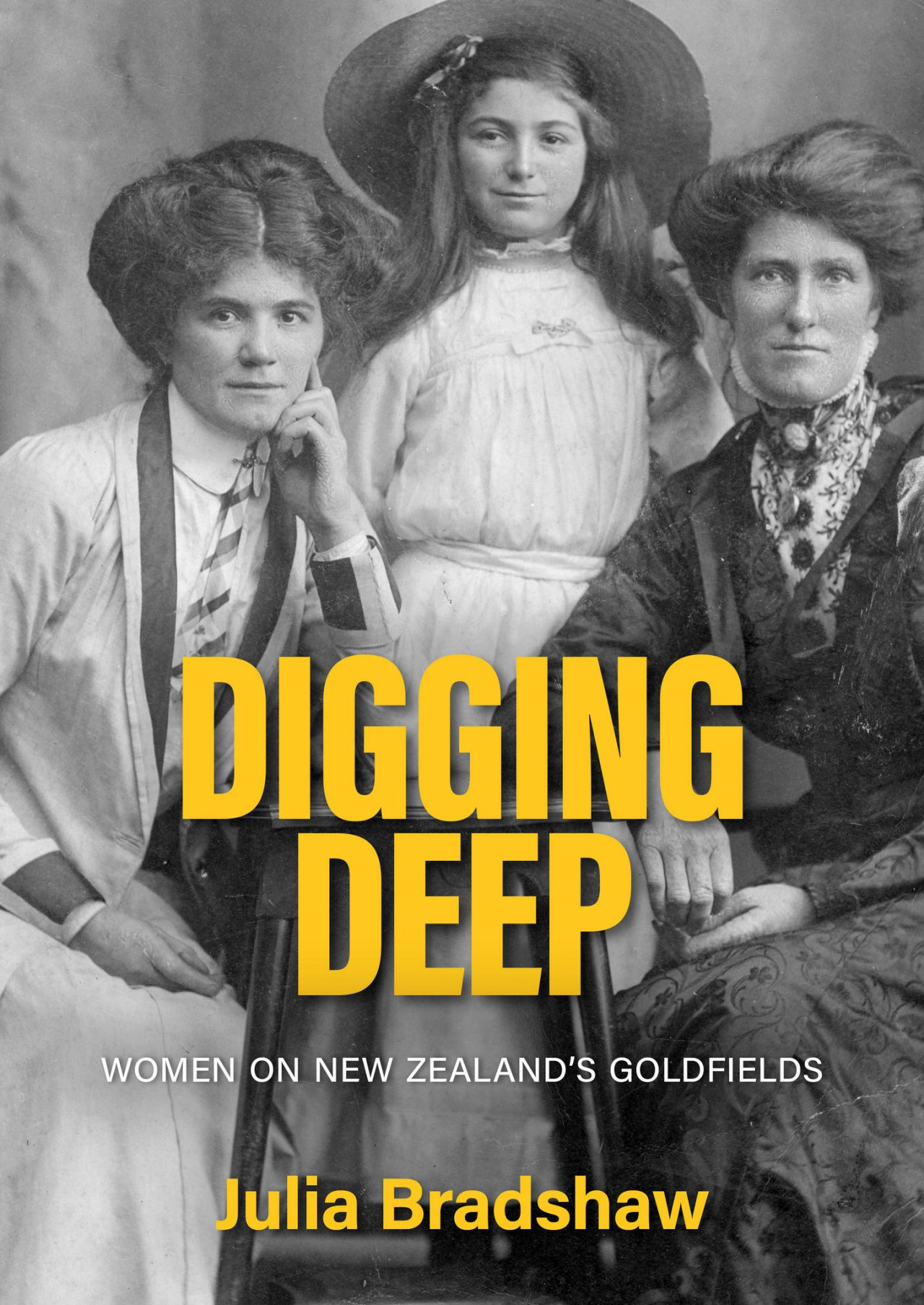
In the goldfields of New Zealand that opened up after the 1860s in goldrushes that rapidly followed one upon the other, there were, of course, women as well as men.
A recent event in the town of Hokitika, itself a settlement founded on the gold reserves that exist on the Te Tai Pountini/ the West Coast, saw the launch of a new book: Digging Deep: women on New Zealand’s goldfields. The author, Julia Bradshaw, who is Senior Curator at Canterbury Museum in Ōtautahi Christchurch, has been thirty years in the making and reveals the extraordinary lives of women who were not only wives, partners and mothers, but also actively worked the fields for the precious mineral, ran hotels, laundries and bars, were employed as servants or in dance halls, and sometimes were explorers who walked vast distances to follow the gold.
The book is an informative read. It includes photographs and drawings of the time and there are small nuggets of intriguing information that beg for further research. Some women worked as seamstresses or opened their own drapery stores while one Pākeha (European) forged a profitable relationship with Māori women on the fields by turning her hand to sewing and making their clothing. In many of the photographs in the book there are immaculately turned-out women, incongruous in the mud, standing besides hastily built dwellings or workings, or taken in the photographic studios that operated then. Where were these clothes from? Were they made locally or were they imports from elsewhere? There are many questions still to answer.
Irihapeti Te Paea, Queen Emma of the Thames gold fields, is one of the fascinating people who are included in the book. She appears in photographs at the time, distinctive with her moko kauae (chin tattoo) and in Victorian dress and jewellery. (Find out more about her and her descendants on Facebook).
While Bridget Goodwin, aka Biddy of the Buller, is probably the best-known of the women on the West Coast, there were others. Amongst them was Anastasia Foley. The photograph below, which also appears as the cover of the book, is of Anastasia (right) with her two cousins, Bridget and Emma. Anastasia was a tall, red-haired woman with a powerful presence who operated a gold-sluicing claim near Westport in the 1890s. Apparently she could handle a shovel as well as any man and was known for riding a massive horse into town. Anastasia earned enough from her West Coast claim to personally finance the passage of two of her cousins from Ireland to New Zealand. There were also two sisters, Maud and Nellie Gardiner, who actively worked their father’s alluvial gold claim, Sons of Freedom, located in Waiuta outside Reefton. Nellie continued to mine well into her 80s.
