

Along with the major showing in Arsenale and Giardini, there are country pavilions across the city. Many of those in Giardini have individual counterparts in the Arsenale curation, but there are plenty of others to see in the venues across the park.
In the main art show in Giardini, Puerto Rican artist, Daniel Lind-Ramos, presents assemblages of found and gifted objects, such as a kayak and chairs, that represent the escape and marooning of black people in the mangrove swamps as they sought sanctuary from slavery in the 17th, 18th and 19th centuries. Watching over these memorials are sentinels, guardians of the land, created from the same materials that are often found after natural disaster leaves them in unusual places.


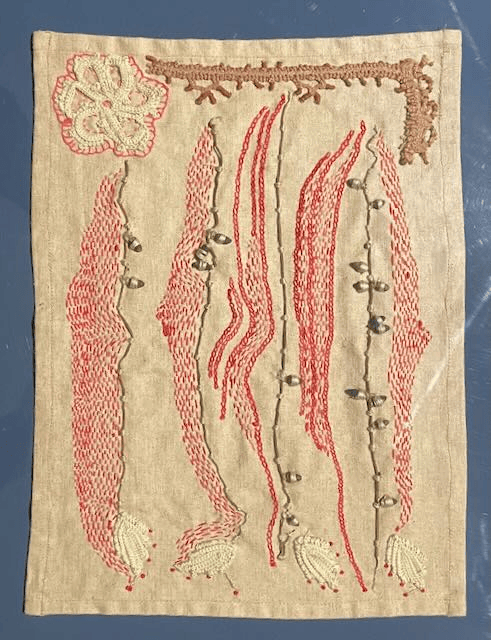
Nearby, Annalee Davis, who lives and works on a former plantation in Barbados where her family have been for generations, embroiders and appliqués historic linens with images of plants that have long been traditionally used in the region. The works represent a reaction to the speed and destruction of modern life – the pieces take time to create – and acknowledge the complexity of history. Embroidery came with the British to Barbados and was adopted by women to signify femininity. Repurposing these linens becomes a subtle and beautiful form of protest.
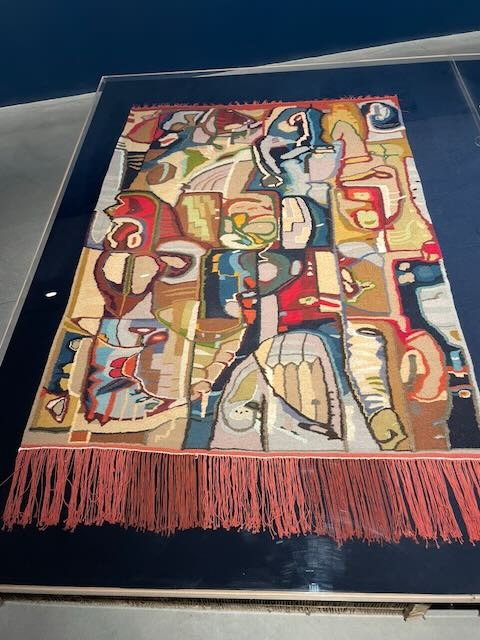
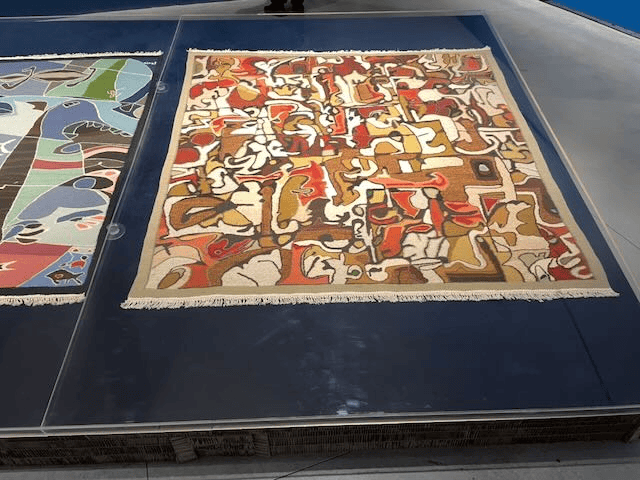
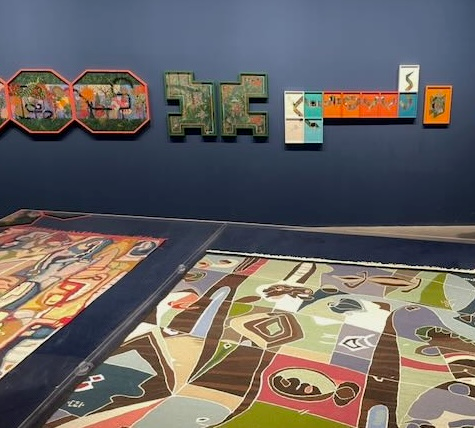
Amina Saoudi Ait Khay from Morocco who lives in Tunisia, revels in improvisation. Her woven tapestries, reflecting Amazigh heritage are created with natural-dyed wool and echo memories of the landscapes of her home country and of her carpet-maker and political activist mother.
Above the tapestries are embroideries. The artist once signed up for a silk-painting course hosted at a ladies club but she quit after the instructor disparaged her resistance to following instructions.
The French serti technique starts with the transfer of a drawing from paper onto silk, then retracing the outlines with a resist, thus defining areas where paint or dye will soak into fabric and be contained. The artist became fascinated with the texchnique but was not interested in “representing a flower’s bloom, but rather the meaning of the blossoming”.
Mohammed Joha who lives in France but is from Palestine, creates collages that reflect on destruction and rebuilding, resilience and resistance in Gaza, the city of his birth.
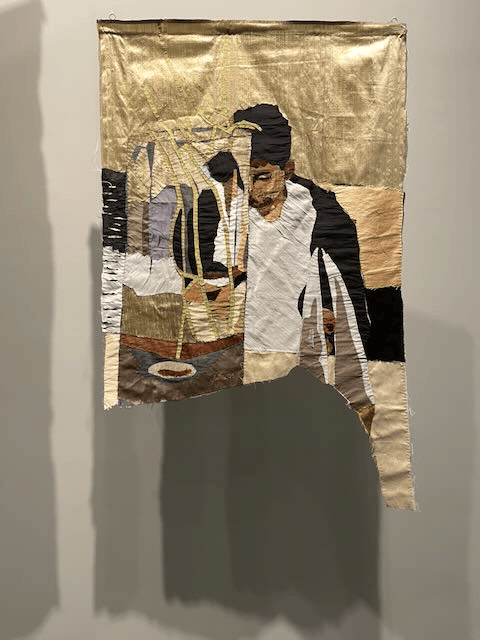

Similarly, Malawian Billie Zangewa who now lives in South Africa, uses textiles to make a the point that the everyday can be quietly beautiful. Using raw Dupion silk from mostly discarded or remaindered sources, these pieces reflect on motherhood and the invisible but constant presence of women in daily scenes.

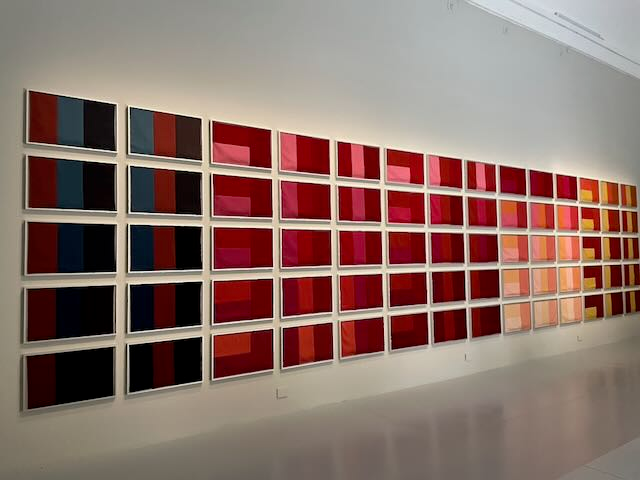
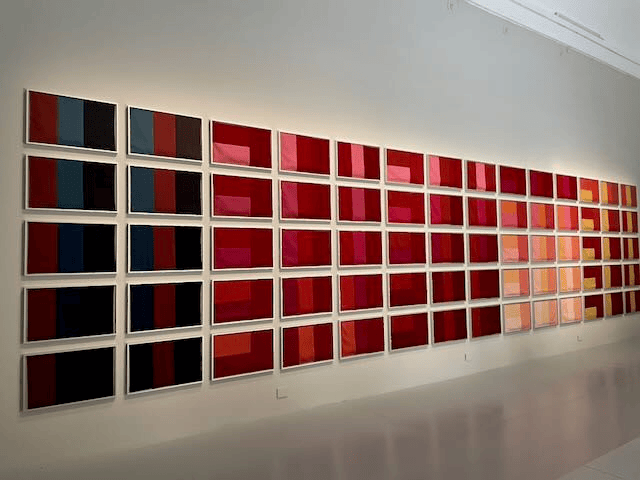
Outside, the French pavilion features the work of Yto Barrada. Comme Saturne (Like Saturn) references both the planet under which artists are said to be born, and the mythical Greek Titan, Cronus, named Saturn by the Romans, who ate his own children in fear of a prophecy that one of them would overthrow him. Barrada’s installation uses colour and texture to represent violence, transition and the passing of time in a typically poetic interpretation that explores methods of communication and transmission.


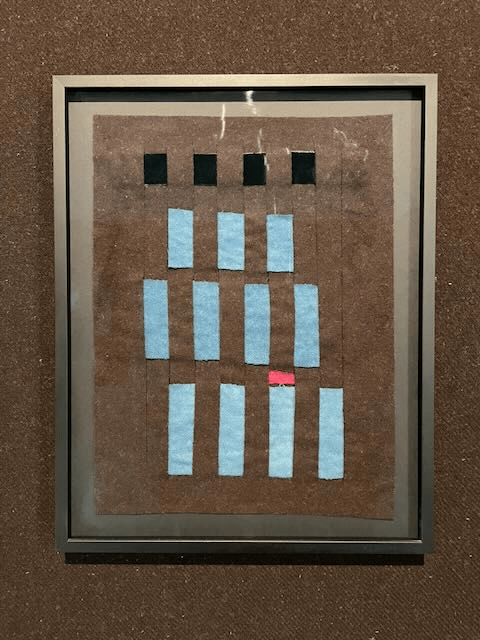
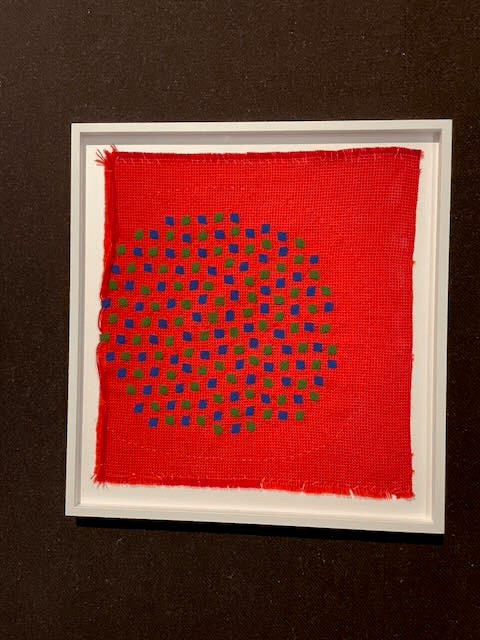
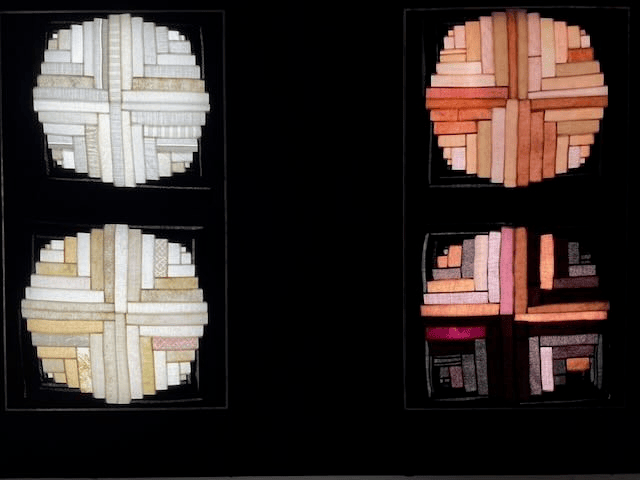

Outside Giardini the country pavilions continue with Moldova presenting flying carpets in an old church, courtesy of Pavel Brăila. The artist uses the motif of magical carpets as a method of transport, both real and imagined, and as refuge from harm. In a darkened room the woven rugs hang suspended, a dimly-seen route to escape and escapism.


Lastly, to close the review of the Biennale 2026, Fondazione Dries van Noten, housed in Palazzo Pisani Moretta, shows The Only True Protest is Beauty. Here craftsmanship is the focus in fashion, jewellery, design, art, photography, glass, ceramics, and material experimentation. Luxurious and unexpected, the pieces and their juxtaposition allow us to marvel and wonder.


