

This week, a book on using lichen as a dye source has been donated to the library.

Published in 2001 by Dover Publications in New York, the source book explores the history and practice of using lichens, those fascinating symbiotic organisms that exist in the hot and the cold, wet and dry areas of Earth, as a way to create hues suitable for colouring cloth.
Dyeing with lichen is an ancient art. The Tarim Mummies of China were preserved in their clothing of wool, dyed with plants and lichens, for two thousand years. Scottish wool was similarly coloured using age-old techniques well into the 20th Century, as this video shows. Ancient Greeks produced a range of colours, from rose to blue, using a lichen called phycos (Roccella tinctoria), the same one that made the weavers France and Italy wealthy. In fact, the surname of a family from Florence, Rucellai, comes from the Latin name of the organism. The home of the family, Palazzo Rucellai in Florence, was built on the profits made from “poor man’s purple”, the hue derived from the lichen.
Lichen Dyes: The New Source Book was written by Karen Dyadic Casselman and has recipes, collecting hints and tips, and ways to be ethically conscious whilst finding and making use of the material. The book is now in the library collection and can be read when the studio is open – 11 to 3 weekdays – and by appointment.
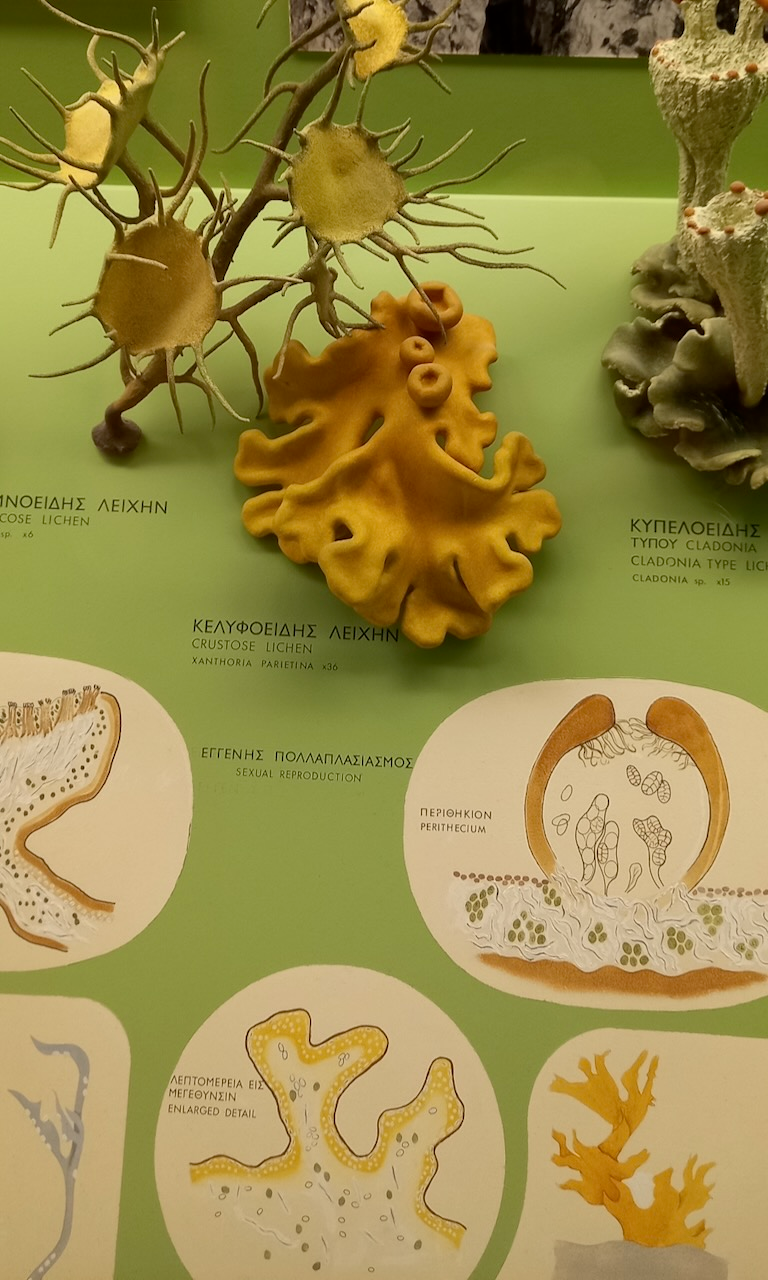
Header image: Lichen models and diagrams in the Goulandris Museum, Athens.
Comments
3 responses
Thank you Andy and Andrew, I am fascinated with the many different colours we get from the lichens around this area, especially Lake Kaniere after a wind fall from the canopy of the rimu trees (using mordants help too). Looking forward to reading your ‘Lichen Dyes’ one day soon, fascinating!
Happy travels to you both, take care
cheers janz
Thank you Andy and Andrew, I am fascinated with the many different colours we get from the lichens around this area, especially Lake Kaniere after a wind fall from the canopy of the rimu trees (using mordants help too). Looking forward to reading your ‘Lichen Dyes’ one day soon, fascinating!
Happy travels to you both, take care
cheers janz
Thank you Jan. I have never dyed with lichens but I am looking at getting down to one of the Creative Fibre sessions next time a class is on.