

As many readers will know, the Bayeux Tapestry will be on show in London, its first visit across the Channel since it was made nearly a thousand years ago.
The transport of this fragile and precious cargo was not the only complication. There, inevitably, was bureaucracy involved and politics at play, with curators insisting that the cloth was too delicate to be transported safely and politicians adamant that the loan of the embroidery was a done deal. The British Treasury has provided the money to insure the priceless 70 metre long textile, and science played a huge role in crating the piece up and shipping it over the sea.
Story cloths like this are important for many reasons. Not only are some of them historic documents, capturing moments from the past, but they can also be political or person records. A textile bought at an estate sale in Maine uncovered a story cloth – a Pa Ndau or Paj Ntaub in Hmong (flower cloth) – with a compelling history and equally fascinating story told through its threads and fabrics. In the studio collection there is a story cloth from Zimbabwe that tells of the daily life of a rural woman from the rise of the sun to its setting. Bought in Bulawayo about a decade ago the piece, called A Woman’s Day, has hung in the studio in Shetland with a companion piece: A Shetland Crofter’s Life. The latter was inspired by the African work and features tractors, cows, hens, washing on lines, an agricultural show and, of course, a Shetland sheepdog or two and some ponies. In Chile arpillera commemorate the years that the country was under the regime of General Augusto Pinochet with depictions of conflict and family and houses and stories are being told through textiles in the work of Common Threads Project.
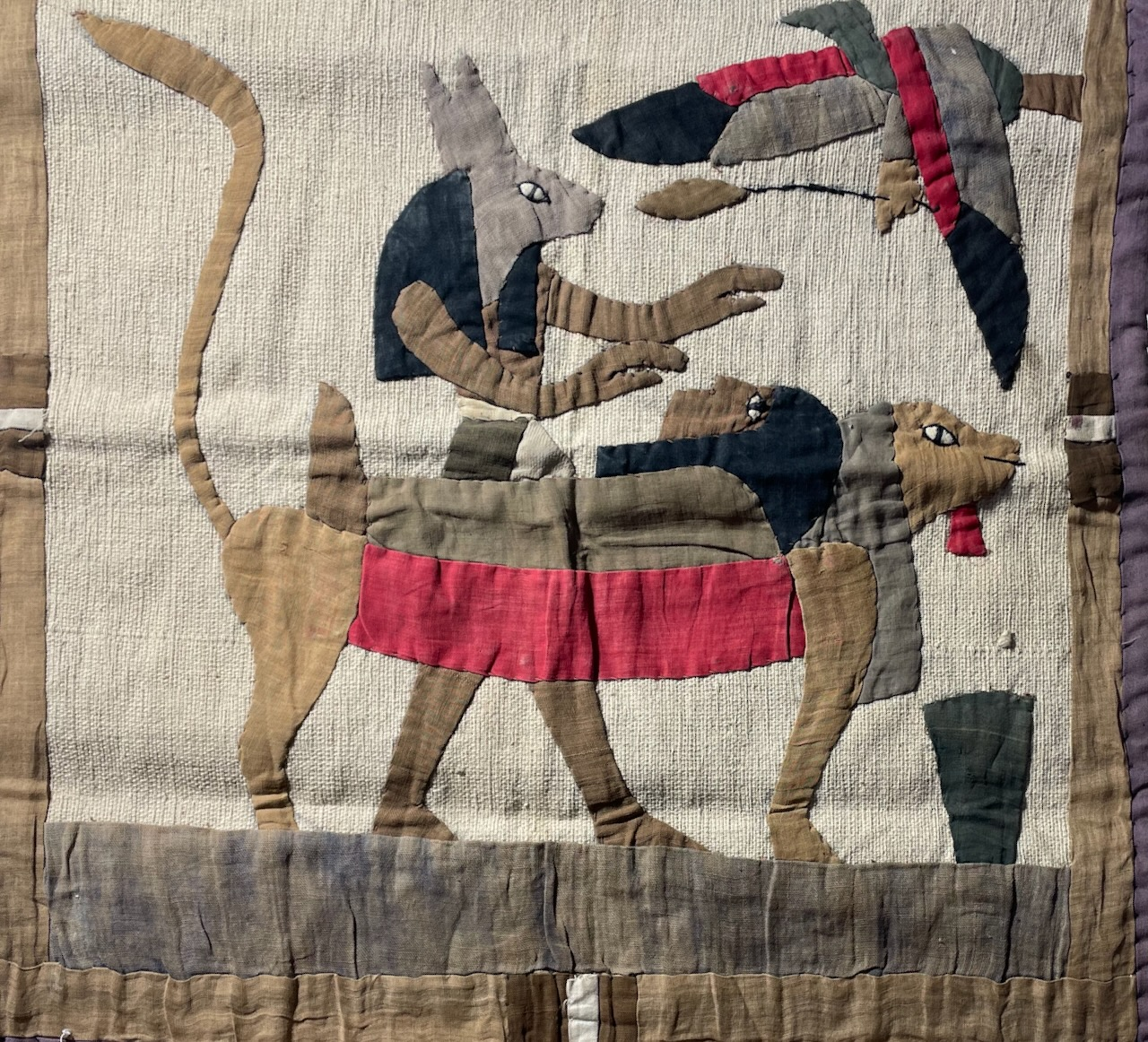
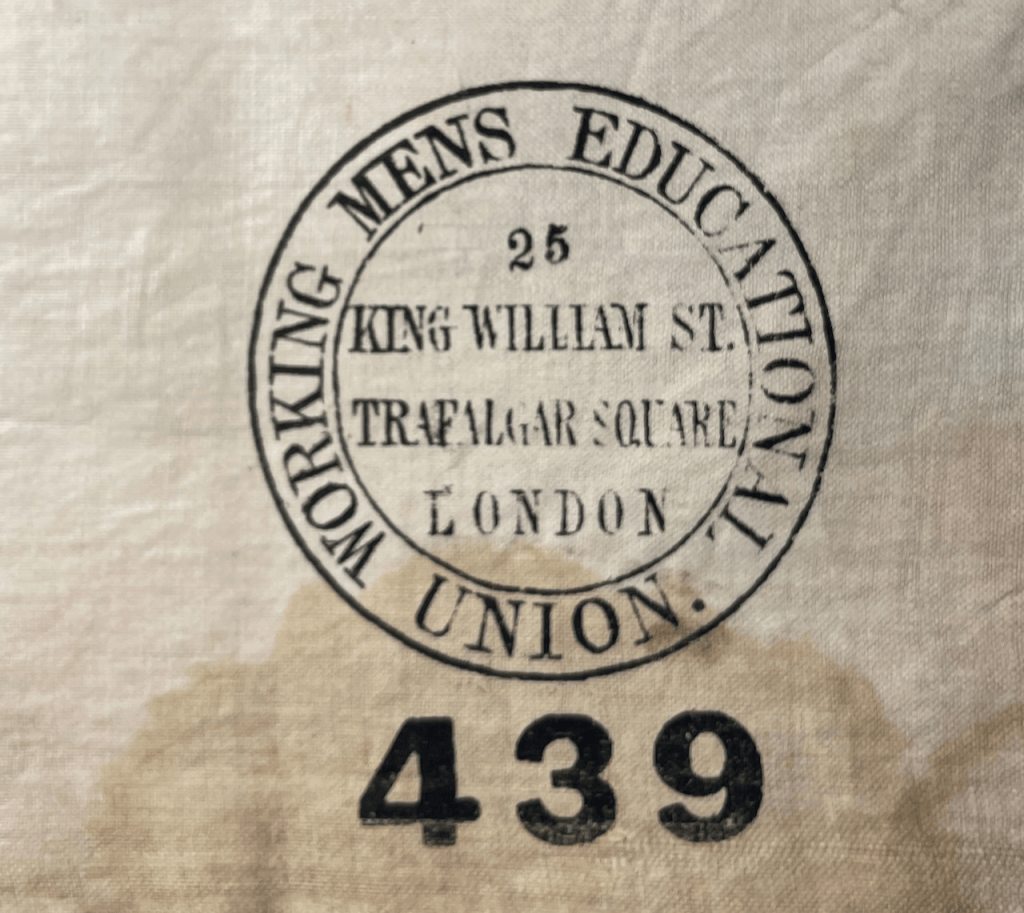
On a slightly different tangent but still encompassing stories on textiles, the studio owns a collection of cloths from the Working Men’s Educational Union that was based in London’s Trafalgar Square. These early 20th Century cloths were used to illustrate talks, in this case Ancient Egypt, the cloths go with a set of appliqué cloths on the same topic. The header image is of one of the appliqués: Tutankhamen’s coffin as it was found by Howard Carter. The photographs below show one of the cloths and its stamp.

Comments
4 responses
Dear Andy,
Thanks so much for the animated Bayeux Tapestry. We have just returned from a week in Normandy which was delightful. We visited Bayeux, a delightful little place, no problem parking and plenty to see with no crowds as you can picture. We had a wonderful time, Normandy is so beautiful and charming, though full of places my poor father fought through in 1917 and 18. I was pleased to see that ost of their marches had been on the level,
Much love, Mary
Hello Mary,
Well, that sounds like a great trip, although I imagine it must have been tinged with sadness for your father. Are you going to manage to see the piece while it is in London?
Love from New Zealand.
This reminded me of the blue and white china Willow Pattern. My grandmother always told her version of the story whenever she saw one. I would imagine there was an original story connected to it.
Hello Jean,
That is a link I hadn’t thought of before. This link explains a lot more of the history of the china. Thank you for commenting and leading me on a path of discovery. https://www.liverpool.ac.uk/victoria-gallery-and-museum/blog/2021/willow-pattern/